
- Working Time: 3 hours
- Total Time: 2 days
- Skill Level: Kid-friendly
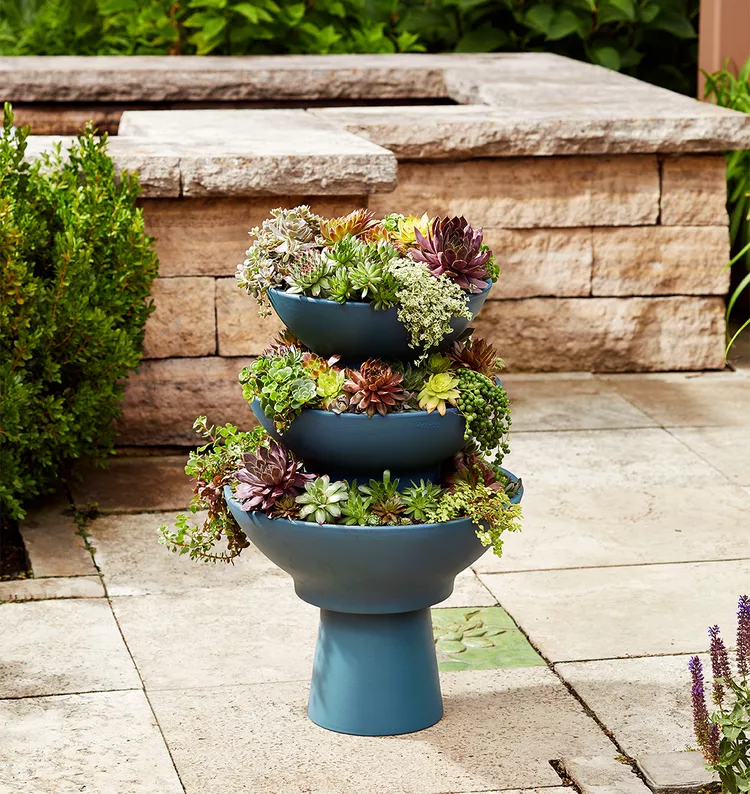
High-fired, high-quality terra-cotta pots wearing weather-resistant stain bring their workhorse qualities—sturdiness, dependability, versatility, reusability—to this vertical garden tower. The equally sturdy and dependable plantings star Chick Charms Sempervivum—new, more colorful varieties of hens-and-chicks—which teams up with trailing succulents to grow into a colorful, textural tapestry.
Terra-cotta bowls work best for this DIY tower garden because they drain well and are wide and shallow—just right for shallow-rooted succulents. The tapered pots used here as pedestals have a contemporary look. You can easily substitute other pots, as long as they come in graduated sizes to achieve the vertical garden tower effect. When selecting pots, stack them into the desired configuration to see if the sizes and shapes work together to create a vertical container gardening masterpiece.
A very well-draining soil mix is key to successfully growing succulents—the ideal tower garden plants. We started with a high-quality potting mix that contains peat moss, humus, perlite, and limestone, then increased the drainability with coarse sand and chicken grit (grit can be purchased at a feed store). Other keys to succulent plants’ survival: direct sun at least three hours a day, afternoon shade to prevent sunburn, and consistent watering to keep the roots barely moist. Succulents rot if overwatered, so don't water your tower garden every day. We used plastic milk jug caps as hidden pot feet for the medium and small bowls to allow excess water to drain easily from each bowl of the vertical garden tower.
If you are putting the tower garden on a deck, patio, or other hard surface, stack the pedestals and bowls, plant the bowls, then thread the dowel— cut to fit—all the way through the planter. If your tower garden will sit on the ground, find a sunny spot for it, set the largest tapered pot upside down there, then press the dowel through the pot’s drainage hole and into the ground. The dowel will help hold the planter parts in place once they are threaded onto it.
Compared to aeroponic tower gardens, strawberry towers, tomato towers, herb tower gardens, aquaponic vertical gardens, and hydroponic garden towers, this succulent tower planter requires very little maintenance. Once you've made your tower garden, it thrives easily on its own! Use these simple steps to create your own gorgeous succulent tower planter.
What You'll Need
Equipment / Tools
- Paintbrush
Materials
- 3 terra-cotta bowls—12, 14, and 16 inches in diameter
- 3 tapered terra-cotta pots—5, 6, and 10 inches in diameter
- Exterior paint
- 6 plastic milk jug caps
- 2 parts high-quality potting soil mixed with 1 part each coarse sand and chicken grit
- 2–3 dozen low-growing or trailing succulents—we used a mix of Sempervivum, Sedum, Portulacaria, and string-of-pearls, Senecio
- 1/2-inch-diameter wooden dowel
Instructions
-
Test Pot Layout
Decide where you will place the finished DIY tower garden. Alternately stack the tapered pots and bowls from largest to smallest to check for fit and stability. Unstack pots and bowls.
-
Stain Pots
Brush exterior paint on each pot and bowl. Let dry for at least one hour. Apply a second coat of paint to ensure that your vertical garden tower is weather-resistant. Allow pots and bowls to dry overnight.
-
Create Pedestal
Place the largest pot upside down in the chosen location for your vertical garden container. Top with largest bowl. Put three milk jug caps in the bottom of the bowl for drainage. Set the medium-size pot on the caps as a pedestal.
Related: Container Garden Design Basics
-
Fill Bowl With Plants
Fill the bowl with potting mix to within an inch or two of the rim. Tuck in plants, leaving room between them for growth. Place a few trailing plants at the bowl's edge to add a touch of drama to your tower garden.
-
Add Medium Bowl
Set the medium-size bowl atop the pedestal, and place the remaining milk jug caps in the bottom of the bowl. Set the small pot on the caps. Add potting mix and plants to the bowl as you did in Step 4.
-
Add Final Bowl and Secure Dowel
Set the small bowl on the pedestal. Slide the dowel through the holes in the bowls and pots. Plant the small bowl to finish your DIY succulent tower planter!