
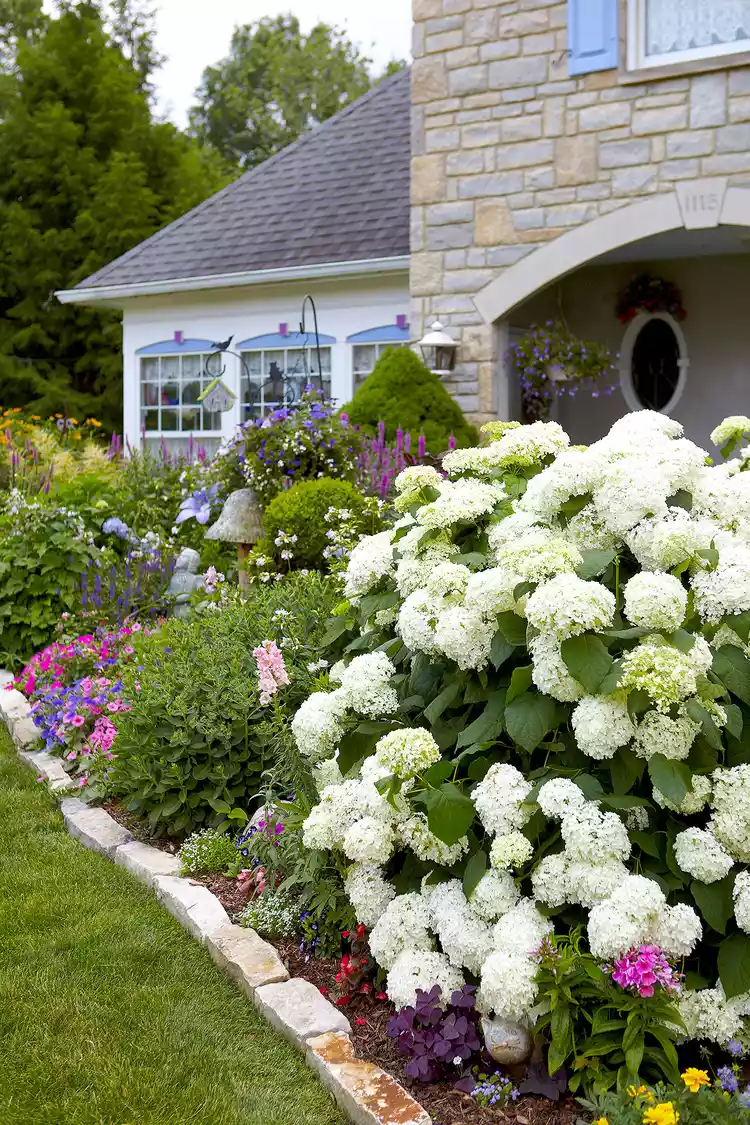
A flower bed gives you a place to plant colorful annuals, perennials, and shrubs that can fill your yard with beauty. And flowers, of course, are essential for butterflies and other pollinators, so if you learn how to make a flower bed for blooming plants, it will help roll out the welcome mat for these beneficial creatures.
Like a blank canvas, a new flower bed offers you the chance to get creative and fill it with whatever you love. The options are nearly endless but first comes the actual building part. This might seem daunting, but with some planning, preparation, and sweat equity, you'll soon enjoy a more beautiful, flower-filled garden.
How to Make a Flower Bed
When figuring out how to make a flower bed from scratch, there are a few things to consider first. Here are the questions you need to answer:
Where will it go?
Anywhere from a corner of the backyard to your front entryway can make a great spot for a flower bed. You can place one along a deck or porch, underneath a tree, or around a garden feature like a pond, for example. If you plant near a driveway or along a curb, consider traffic safety when it comes to plant height, and if you live where it will get icy in the winter, keep in mind salt spray, which can kill plants.
How much sunlight will the space get?
Many popular bedding plants, like annual flowers, require full sun, meaning a minimum of six hours of direct sunlight daily. You can choose a spot in part-sun or even a mostly shady area, but you'll be more limited in what flowers will grow there.
What's the soil like?
Most flowering annuals and perennials appreciate loamy soil with plenty of compost added to it. Make sure to rake away rocks or other debris from the site, break up large clods of dirt, and add compost to enrich the bed and encourage healthy plant growth. It's also a good idea to do a soil test to determine if you should add any nutrients your plants need to look their best.
Flower Bed Ideas and Designs
Once you've chosen a site, it's time for the fun part: Flower bed design. Here are some ideas to spark your imagination for how to make a flower bed as pretty and useful as it can be.
- Looking to make a statement in front of the house? Wrap a small flower bed around your mailbox, line your front walkway, add color underneath a tree, or surround the bases of the front porch risers.
- Get geometric with a perfectly square, rectangular, circular, or triangular bed.
- Focus on tall or dense plants to help block unattractive backyard features such as air conditioners, trash cans, swimming pool heaters, or storage sheds.
Removing Grass and Building the Flower Bed
:strip_icc():focal(824x0:826x2):format(webp)/removing-grass-layer-shovel-marked-area-1af88a4a-0ec09e2cb4f545f58ca1adfeabbb2be1.jpg)
:strip_icc():focal(824x0:826x2):format(webp)/rolling-layer-grass-inside-marked-area-c8234c6e-a92547ecf0dc4e4ab2a9a9773c03a0ed.jpg)
Unless you've got an already bare patch of earth, you'll need to remove the turf before planting your flowers. After marking the outline of your new flower bed with spray paint or white flour, there are two basic ways to remove the grass inside your lines.
Dig up existing grass.
Digging out the grass can be hard work. First, use a shovel to remove a section of grass from the center of your planned bed, then continue to remove turf by wedging the shovel (a hoe also works) under the edges of the grass. Then lift and peel the sod away. Once you've removed the grass, you can prepare the soil for planting.
How to Make a flower bed without digging.
Removing grass without digging is the lengthy-but-easy method. Simply cover the entire area of your future flower bed with several overlapping sheets of newspaper. Layer the paper at least six pages deep, then cover the newspaper with several inches of rich soil or compost. Water well. Over the next few months, the buried grass will die, and the newspaper will decompose while adding nutrients to the soil. Keep the area covered for up to a year before planting for best results.
Once the turf has been removed, outline the area with some landscape edging made of plastic, stone, brick, or wood. Some quirky materials you can use for edging include glass bottles, large seashells, or decorative metal fencing.
Build a raised flower bed.
There are a few ways to do this. You can use wood boards cut to the desired length. This lets you build whatever shape or size you want. But if you prefer the simplest solution, there are raised flower bed kits that supply everything you need and easily snap together without sawing or hammering. Most kits create fairly small squares or rectangles.
If you build your raised flower bed on top of existing grass, cover the turf with a few sheets of newspaper, then top the paper with garden soil or a soil mix designed for raised beds, and finish off with a layer of compost. If you want to build on top of concrete or another hard surface, you'll need a protective bottom layer of permeable landscape fabric. This will help keep soil from leaking out the bottom of the raised bed yet allow water to drain.
Flower Bed Plants
You designed your flower bed, removed the grass, prepared the soil, and edged your soon-to-be-planted site. Now it's time to plant! Choose varieties that do well in your climate and are suited to your site's exposure to sunlight. But beyond that, the best flowers are the ones you love the most.
- Low-growing annuals such as sweet alyssum, lobelia, and impatiens work well as front-of-the-border plants.
- Add zing in the front of the house with a colorful mixture of varied-height beauties like zinnias, snapdragons, or marigolds.
- Tall flowers, including sunflowers, hollyhocks, and cosmos, can be especially inviting when flanking the steps to your front porch or along a property fence.
- Raised flower bed planting ideas include a center row of tall and medium-height blooms with a border of cascading flowers like bacopa, ivy geranium, moss rose, or calibrachoa.
- Other ideas include a garden of single-color flowers, a patriotic mix of red-white-and-blue blooms, a pastel flower bed, or a "moon garden" planted entirely in white flowers.
Building a flower bed from scratch might seem intimidating, but it's a fairly straightforward project that just about any enthusiastic DIYer or gardener can accomplish. The time spent planning, designing, and preparing will be repaid once you have the time to admire your beautiful blooms.