
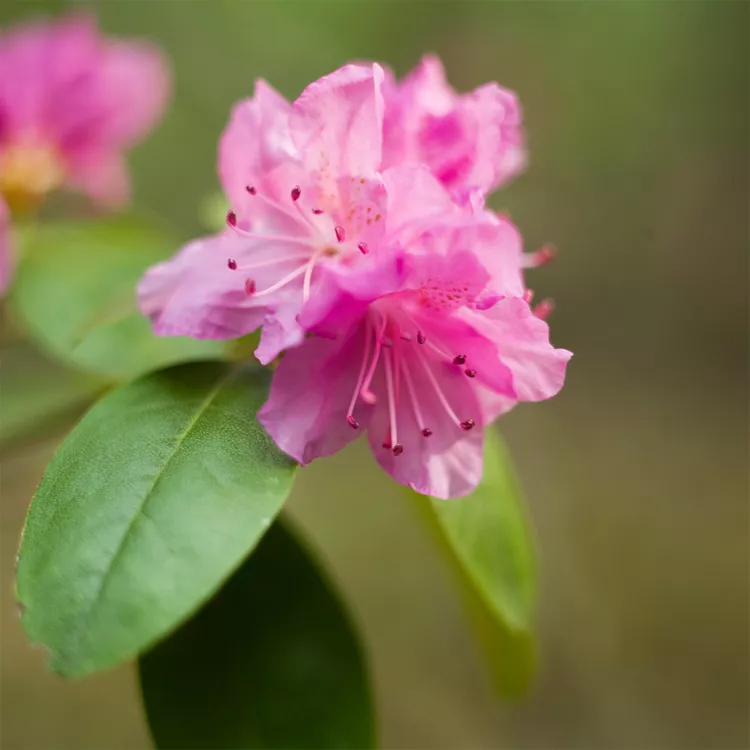
Although generally low-maintenance, rhododendrons occasionally do need pruning to rejuvenate them. Timely pruning can bring a long-forgotten plant back into a pleasing shape and size. Then, these long-lived woody shrubs will reward you by flowering and growing year after year with almost no care. Here's how and when to prune rhododendrons, plus a few must-know tips to help you take excellent care of all your rhodies.
Know Your Pruning Goal
A rhododendron growing inbounds of its planting area and lush with foliage should only need a light pruning. But a very overgrown rhododendron needs a different pruning game plan. Take a minute to assess the state of the shrub before grabbing your pruners.
Pruning can do many things for overgrown rhododendron shrubs, including spur leafy new growth, increase the number of flowers in spring, and increase the overall size of individual flowers. A loosely branched, lanky plant with few leaves on the lower stems or branches is most likely overgrown and ready for significant pruning.
Pruning does not help a struggling rhododendron overcome challenging site conditions. Plants growing in full sun or heavy clay soil will continue to suffer until they are moved to dappled light and well-drained soil. Pruning only further stresses a plant growing in poor site conditions.
When to Prune Rhododendrons
Experts agree that healthy rhododendrons require little pruning. These shrubs don’t respond well to an annual hard pruning the way other woody plants might. In fact, rhodies tend to produce fewer flowers when pruned too much. If you must prune a rhododendron to limit the size, do it in spring right after the plant blooms.
Grabbing your pruners when you spot a dead, broken, or diseased branch is also important. Cut the branch back to the closest healthy branch. Occasionally, dead, broken, or diseased branches need to be cut back to ground level.
Many rhododendron varieties developed in the last few decades grow to form a dense mound of foliage only a few feet tall, unlike older cultivars that often grow more than 12 feet tall. A few short, compact cultivars include ‘Landmark,’ ‘Bubblegum,’ and ‘President Roosevelt.’
How to Prune an Overgrown Rhododendron
Rejuvenation pruning rhododendron shrubs that have gotten too big calls for a 3-year pruning plan. If you cut off too much live growth at one time, the plant might not recover, dying the following season. The best time to prune an overgrown rhodie is spring, right after the shrub blooms. Use this year-by-year technique to avoid stressing the plant too much.
Year One
Begin by removing any dead, diseased, or broken branches. Look for branches rubbing on one another and remove one of the offenders. Also, keep an eye out for branches growing toward the interior of the plant. Remove these too. Cut out weak, spindly wood, pruning branches down to ground level as needed.
Next, reduce the overall size of the plant. Determine the desired size of the rhododendron when the pruning is complete. In year one, reduce branch length by about one-third to move toward the desired size. Cut only a few overly long branches back to ground level to create the most natural shape possible. In years two and three, you’ll move toward the finished size.
Year Two
Flowering will likely be limited this spring after the significant pruning last season. In late spring, remove any dead, diseased, or broken branches from the previous growing season. Then, prune to reduce the size of the shrub, removing no more than one-third of the growth.
Year Three
Year three is the last year of major pruning. After removing any dead, damaged, or diseased wood, cut branches back to achieve the desired shrub size. Flowering will be limited a year after the pruning is complete, but the shrub should rebound and bloom well the following spring.
Rhododendron Care Tips
You can avoid or reduce the need to prune your rhododendrons by taking good care of them. Healthy plants will suffer less weak or damaged branches that need to be cut off.
- Dappled light is best. Rhododendrons grow best in part shade. Plant them in dappled light under established shade trees, or grow them on the north or east side of a building where they receive welcome shade from the hot afternoon sun.
- Well-drained soil is essential. Clay or slow-draining soil will kill rhododendrons in short order. Choose a planting site that drains freely. The best soil is dark in color and crumbly.
- Water during drought. Rhododendrons have shallow root systems. They suffer when the top few inches of soil dry out and stay that way for two to three weeks. Water established plants deeply and infrequently during drought. Prolonged wet soil is just as troublesome. Allow the soil around plants to dry out before watering.
- Mulch matters. Spread a 2-inch-thick layer of compost, shredded bark, or pine straw over the shrub’s root zone. The root zone extends far beyond the outermost branches of the plant. The mulch keeps the roots cool and provides valuable nutrients as it decomposes.
- Protect from winter winds. Rhododendrons benefit from protection when temperatures regularly fall below zero and winds whip through your landscape. Wrap the plant with a burlap cloth in late fall and remove it as soon as the harsh winter weather subsides.