- 01 of 14
Bracco Italiano
Also known as the Italian pointer, you can trace the Bracco Italiano or "Italian hound" back to the 5th century. They are one of Europe's oldest pointers. In the early 20th century, a dedicated breeding program helped revive their numbers using two Bracco varieties, one from Italy's Piedmont region and the other from the Lombardy region.
Known for being incredibly reliable in the field, the Bracco tends to be more docile at home than other pointing breeds. They're gentle and affectionate dogs that form strong bonds with their family members. The breed tends to drool and is vocal. They're also still relatively rare in North America.
Breed Overview
Group: Foundation Stock Service/miscellaneous class (AKC)
Height: 21 to 27 inches
Weight: 55 to 90 pounds
Personality/Temperament: Active, intelligent, loyal, affectionate
Energy Level: High
Coat and Color: Short, dense, and glossy coat that comes in solid white, white with orange or chestnut patches, orange or chestnut roan
Life Span: 10 to 14 years
- 02 of 14
Brittany
Often referred to as a spaniel, the Brittany is a pointing breed. These dogs were developed around the 17th century in the northern region of Brittany. These versatile hunting dogs are compact and medium-sized. Their size, skills, and temperament make them a high-demand choice.
The Brittany is a high-energy breed that tends to be good with other dogs and gentle children. They can be sensitive and prone to separation anxiety, but they're eager to please and respond incredibly well to positive training techniques.
Breed Overview
Group: Sporting (AKC)
Height: 17.5 to 20.5 inches
Weight: 30 to 40 pounds
Personality/Temperament: Intelligent, adaptable, attentive
Energy Level: High
Coat and Color: Flat or wavy, dense coat that comes in orange and white or liver and white markings and sometimes with roan patterns
Life Span: 12 to 14 years
- 03 of 14
English Setter
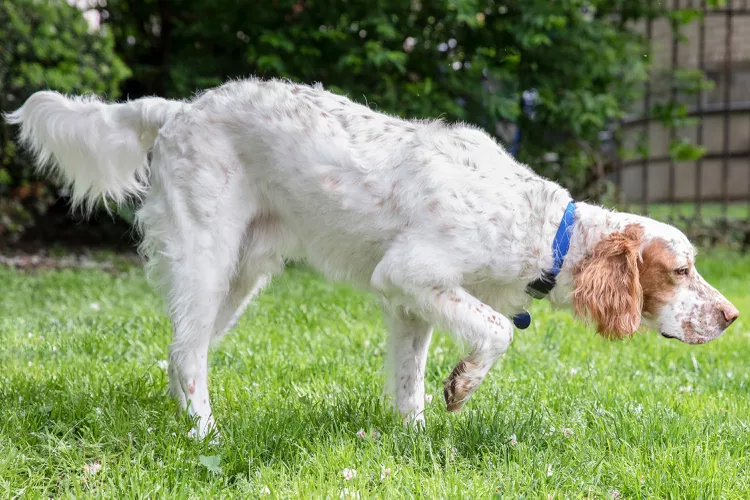
The English setter is the most popular of three silky-coated setters to originate in the United Kingdom. Like the Bracco Italiano, this breed has a long heritage—15th-century art features dogs that look similar to this setter. These dogs grew in popularity in the 18th century with owners of grand English estates who enjoyed hunting. Although regarded as a pointing breed, these dogs were initially developed to lie down to "set" when they detected their quarry, like their relatives, the Gordon setter and the Irish setter.
The English setter has a unique speckled coat that’s called “belton.” The breed is also known for being incredibly mellow, and tends to enjoy the company of gentle children and other dogs. Although English setters still need plenty of exercise, they're often calmer around the home than some pointing breeds.
Breed Overview
Group: Sporting (AKC)
Height: 25 to 27 inches
Weight: 65 to 80 pounds
Personality/Temperament: Independent, lively, playful, affectionate
Energy Level: Medium
Coat and Color: Long, flat, silky, and a little wavy coat; white coat base with Belton markings that can be flecks or intermingled roan; Belton colors are orange or black (referred to as blue) and can also be tricolored
Life Span: 10 to 12 years
- 04 of 14
German Shorthaired Pointer
Germany is well-known for its diligent development of skilled hunting dogs known as German shorthaired pointers. Some experts believe them to be the most versatile and capable all-around hunting dog. This breed resulted from the crosses of English and Spanish pointers and the now-extinct German bird dog. By the late 19th century, the breed had an official studbook.
This dog is the most popular pointing pooch in the United States and is among the top 10 of the AKC's overall most popular breeds. GSPs are intelligent, eager to please, happy, and affectionate. They have webbed feet and a great love of water. The German wirehaired pointer is a close relative.
Breed Overview
Group: Sporting (AKC)
Height: 21 to 25 inches
Weight: 45 to 70 pounds
Personality/Temperament: Active, intelligent, attentive
Energy Level: High
Coat and Color: Short, smooth coat with solid liver or a combination of liver and white
Life Span: 12 to 14 years
Continue to 5 of 14 below - 05 of 14
German Wirehaired Pointer
The German wirehaired pointer is another breed from Germany, and this dog was bred to have a weather-resistant coat that would keep them comfortable when hunting in water and on rough terrain. In fact, it is their coat that helps distinguish them from the German shorthaired pointer. These are muscular dogs with webbed feet, with a high prey drive and high exercise needs.
This breed is best for active families who can spend a lot of time with their dog. When left alone for too long, the German wirehaired pointer can exhibit destructive behaviors. Positive training methods should be used, as this is also a smart breed that is eager to please.
Breed Overview
Group: Sporting (AKC)
Height: 24 to 26 inches (male), 22 inches (female)
Weight: 50 to 70 pounds
Personality/Temperament: Loyal, playful, friendly
Energy Level: High
Coat and Color: Medium-length, wiry double coat; liver or liver and white; may have ticked, spotted, or roan markings
Life Span: 14 to 16 years
- 06 of 14
Gordon Setter
The largest of the three setter breeds, the Gordon setter is challenging for the novice dog parent. This dog has a strong protective instinct and wariness around strangers. Also, this hunter companion crouches down, freezes, and "sets," pointing hunters to quarry in the brush. They are heavier, more muscular, and can last in long hunts, and they're well-suited for the rough Scottish highland terrain.
Gordon setters are athletic dogs who have a high amount of energy. They need to be given the chance to run, play, and let their energy out in the great outdoors. When they’re at home, though, they enjoy being with their family, and these loyal companions can even make good watchdogs.
Breed Overview
Group: Sporting (AKC)
Height: 23 to 27 inches
Weight: 45 to 80 pounds
Personality/Temperament: Affectionate, courageous, loyal
Energy Level: High
Coat and Color: Shiny, straight, or wavy single coat; black with tan markings
Life Span: 11 to 13 years
- 07 of 14
Irish Red and White Setter
Known as the “gentleman’s hunting dog,” the Irish red and white setter (IRWS) is from Ireland, and was bred to hunt birds. These dogs love being outside, and are high in energy and eager to please. They are best for pet parents who are active and will give them plenty of time outside to run and play. They enjoy swimming, going on long walks, and, of course, hunting.
These loyal dogs make wonderful companions for individuals and families, and this breed is a good choice for those who want a dog that will want to participate in a variety of activities with them. When not given enough to do, they can become bored.
Breed Overview
Group: Sporting (AKC)
Height: 22 to 26 inches
Weight: 35 to 60 pounds
Personality/Temperament: Affectionate, social, loyal
Energy Level: High
Coat and Color: Medium double coat with feathering; white with red patches
Life Span: 11 to 15 years
- 08 of 14
Irish Setter
The Irish setter was bred for hunting. This dog "sets" or locates and points hunters towards game birds by holding a pointing position, indicating the direction in which the bird lies hidden. They are a wide-ranging hunter, well-suited to fields and wet or dry moors, and use their excellent sense of smell to find birds.
The Irish setter breed came to the United States in the early 19th century. These playful, intelligent, sweet dogs make great family pets. They’re also affectionate, friendly with strangers, and easy to train.
Breed Overview
Group: Sporting (AKC)
Height: 25 to 27 inches
Weight: 60 to 70 pounds
Personality/Temperament: Gentle, athletic, sweet, intelligent
Energy Level: Medium
Coat and Color: Red, medium length with feathering on ears, chest, legs, and tail
Life Span: 12 to 15 years
Continue to 9 of 14 below - 09 of 14
English Pointer
The English pointer is often referred to simply as a pointer. Although this breed has origins dating back to the 17th century, it took shape the following century. These dogs grew in popularity with the growth of the sport of shooting birds in flight in England.
Nowadays, English pointers, who are sometimes called the “Cadillac of Bird Dogs,” are known for being one of the most versatile, hardworking, and popular pointing breeds. They excel in field trials, but with their dynamism and ambition, they also do well in dog sports, including agility, canicross, and obedience. At home, English pointers are loving, loyal, and sweet-tempered.
Breed Overview
Group: Sporting (AKC)
Height: 17 to 21 inches
Weight: 45 to 75 pounds
Personality/Temperament: Sweet, loyal, affectionate
Energy Level: High
Coat and Color: Short, dense coat; color combinations of white with liver, lemon, orange, or black markings; may have solid coloring
Life Span: 10 to 17 years
- 10 of 14
Spinone Italiano
The Spinone Italiano is another Italian pointing breed. These dogs hail from the country's Piedmont region and got their name from the thorny "spino" undergrowth they had to negotiate when hunting. Their coarse fur and thick skin helped protect them when they were tracking in rough terrain. The breed almost became extinct after the World Wars. This is still one of the rarer pointing breeds, but its numbers have steadily increased.
One of the biggest pointing breeds, the Spinone appeals to many pet parents because they tend to be more docile than some of their relatives. They can sometimes be stubborn and may need a little more patience and tasty treats when training.
Breed Overview
Group: Sporting (AKC)
Height: 22.5 to 27.5 inches
Weight: 65 to 90 pounds
Personality/Temperament: Affectionate, social, stubborn
Energy Level: Medium
Coat and Color: Harsh, coarse, dense, flat single coat with a distinct set of bushy eyebrows and beard; solid white, white and orange, and white with brown markings; markings can be roan or solid colors
Life Span: 10 to 12 years
- 11 of 14
Vizsla
The Hungarian vizsla (meaning "tracker") can be traced to the 8th century when ancient Magyar clans roamed the country. These agile dogs had great endurance, making them invaluable hunting partners for the tribesmen. They were highly prized by the noblemen of the country for their speed and versatility.
Vizslas are incredibly big-hearted, dedicated to their owners, and adaptable. Often referred to as "Velcro dogs," they love being in the company of their humans. They can be prone to separation anxiety. They are closely related to wirehaired vizslas, a separate breed.
Breed Overview
Group: Sporting
Height: 22 to 23 inches
Weight: 45 to 50 pounds
Personality/Temperament: Loyal, affectionate, adaptable, gentle
Energy Level: High
Coat and Color: Short, smooth, dense coat; copper or rust-colored
Life Span: 10 to 12 years
- 12 of 14
Weimaraner
The Weimaraner is another German breed that is known for its pointing skills. Although hunters initially used them for searching for big game, the Weimaraner began to gain popularity as an all-around gun dog. They showed a natural aptitude towards pointing and retrieving and became prized in Germany and worldwide.
These dogs are known for being intelligent problem solvers. They need lots of enrichment to keep them entertained and prevent them from creating mayhem at home. Weimaraners adore being around people.
Breed Overview
Group: Sporting (AKC)
Height: 24 to 26 inches
Weight: 70 to 85 pounds
Personality/Temperament: Intelligent, aloof, alert, stubborn
Energy Level: High
Coat and Color: Short, smooth mouse gray or silver-gray coat
Life Span: 11 to 13 years
Continue to 13 of 14 below - 13 of 14
Wirehaired Pointing Griffon
The wirehaired pointing griffon hails from the Netherlands and is also known as the Korthals Griffon. Like other pointers, they have great hunting skills and can hunt both in water and on land. At home, they are affectionate and relaxed, and they can get along with other dogs as well as children.
This is a calm dog who has a hypoallergenic coat that is low-shedding, so this can be a good breed to consider if you have allergies. And this is a good choice for pet parents who are in search of a loyal family dog who will develop a strong bond with their humans and always want to be around them.
Breed Overview
Group: Sporting (AKC)
Height: 22 to 24 inches (male), 20 to 22 inches (female)
Weight: 50 to 70 pounds (male), 35 to 50 pounds (female)
Personality/Temperament: Calm, gentle, loyal, companionable
Energy Level: High
Coat and Color: Medium length, straight, wiry topcoat; fine, thick undercoat; gray with brown markings or combinations of brown, white, roan, and orange
Life Span: 12 to 14 years
- 14 of 14
Wirehaired Vizsla
Although the vizsla with a smooth coat is a breed that can be traced back to the 800s, the wirehaired vizsla is a much newer breed that dates back to the 1930s. Hunters in Hungary sought to create a breed that would be able to tolerate rough terrain and cold conditions, so they developed the wirehaired vizsla by crossing vizslas with other breeds like the German wirehaired pointer. Their strategy worked, creating a new breed with a dense coat.
This rare dog has a great personality. They are affectionate, intelligent, and energetic, as well as good with strangers and children. Because of their playfulness and high energy level, they do need a lot of physical exercise and mental stimulation. And because they’re devoted, they can develop separation anxiety.
Breed Overview
Group: Sporting (AKC)
Height: 23 to 25 inches (male), 21.5 to 23 inches (female)
Weight: 55 to 65 pounds (male), 45 to 55 pounds (female)
Personality/Temperament: Affectionate, gentle, loyal, friendly
Energy Level: High
Coat and Color: Wiry, thick, short; golden rust
Life Span: 12 to 14 years
Other Considerations
None of the pointer breeds are suited to apartment living with pet parents who aren’t prepared to give them long daily walks and plenty of additional physical and mental enrichment.
These breeds are not considered lower-energy dogs like pugs and Chihuahuas that are more content lying cozy in a dog bed or a lap than going out ranging and running. An active outdoor lifestyle or one that is enriched both physically and mentally is ideal for many pointer breeds.
-
Are pointers good family dogs?
Yes, pointers can make good family dogs. They have a lot of energy and enjoy being involved in a variety of activities, and they’re also affectionate and devoted to their humans. One thing to keep in mind is that they can have a high prey drive that might make them unsuitable for homes with other pets.
-
Do pointers need a lot of exercise?
Pointers are active dogs who have a lot of energy. If they aren’t exercised daily, they could end up exhibiting destructive behaviors because of boredom and the need to release their pent-up energy. Therefore, they’re best for active families who can devote enough time to giving their dog the mental stimulation and physical activity they need.
-
Are pointer dogs cuddly?
Many pointer dogs do enjoy cuddling with their humans when they are at home after a day of fun. They are loyal and loving, and will gladly spend time with you even when you are relaxing.