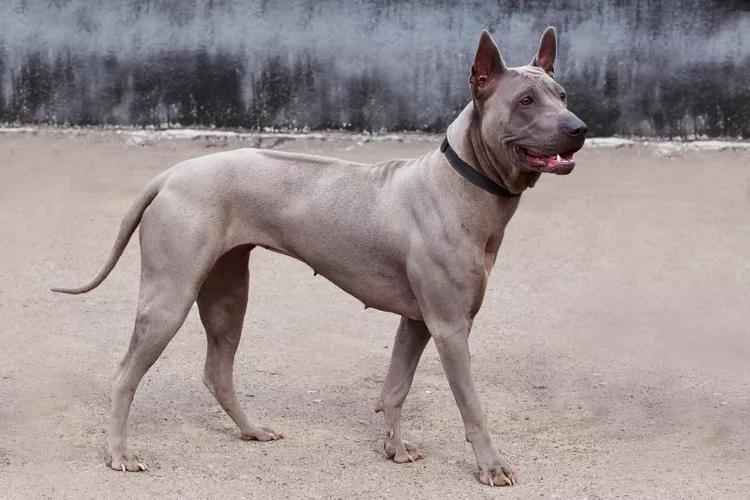
The Thai Ridgeback is a muscular medium to large dog breed with primitive roots in Thailand. This athletic breed is known for the ridge of hair along its back that grows in the opposite direction from the other hair. Thai Ridgebacks are deeply loyal, fierce, protective, and hard-working dogs that are rarely seen outside of Thailand.
Group: Hound
Height: 20 to 24 inches
Weight: Males: 50 to 60 pounds; Females: 35 to 55 pounds
Coat: Short and smooth
Coat Colors: Black, blue, fawn, or red
Life Span: 12-15 years
Temperament: Intelligent, loyal, independent, bold, protective
Hypoallergenic: No
Origin: Thailand
While they may boast a somewhat intimidating appearance, Thai Ridgebacks are among the most loyal and underrepresented dog breeds. Their playful and energetic nature makes them perfectly suited to an active household, and they respond well to firm but kind training.
The Thai Ridgeback is considered a "pariah-type" dog, a term used to describe partially wild, free-range dogs that live on the outskirts of human civilization and reproduce almost entirely by natural selection. Pariah dogs like the Thai Ridgeback have remained much the same over time because there were few opportunities for them to breed with different types of dogs.
The pariah dog ancestors of Thai Ridgebacks can be traced back to ancient Thailand and likely originated around the time dogs first began to evolve from wolves. It is unclear when the Thai Ridgeback actually evolved from Asian pariah dogs, but evidence of the breed can be found in Thai writings from the 17th century. Thai Ridgebacks can be found primarily in Eastern Thailand and the islands of Cambodia, Indonesia, and Vietnam. It is believed that Thai fishermen once brought the breed to neighboring islands.
Thai Ridgebacks were historically used as watchdogs, hunting dogs, and to escort carts. They were even used to kill cobras in some areas. The Dog Association of Thailand was founded in 1976 and recognized the indigenous Thai Ridgeback as an official breed. Thai Ridgebacks were first brought to the United States in 1994 by rare dog breed enthusiast Jack Sterling. The breed has been a member of the AKC's Foundation Stock Service since 1997 and has been designated part of the Hound group.
The Thai Ridgeback is a low-maintenance breed that will be happy in your home does best in moderate to warm climates and is not well-suited for cold temperatures. This breed should live indoors and have access to a yard with a fence if possible.
Thai Ridgebacks are athletic dogs that need daily exercise to keep them in shape and provide an outlet for energy and prevent boredom. Active dogs may benefit from involvement in various dog sports, and puzzles or games are a great indoor option for cold weather climates.
The Thai Ridgeback needs minimal grooming. Occasional brushing is typically all that is needed to keep the coat shiny and remove dead hairs. This breed has no undercoat and tends to shed very little. However, shedding will increase seasonally and can be reduced by brushing their coat and bathing as needed. As with any dog, their nails should be trimmed regularly and their ears should be checked and cleaned periodically.
Training and socialization are essential for the independent and sometimes stubborn Thai Ridgeback. Begin a training routine with your dog or puppy as soon as possible, whether doing it on your own or getting help from a dog trainer. Be consistent and firm yet gentle, using positive reinforcement methods over aversives. Thai Ridgebacks are independent and bold, so they respond best to people with natural leadership qualities.
Be sure to socialize your Thai Ridgeback at an early age, exposing them to as many people and animals as possible. This breed has a high prey drive and is likely to chase small animals like cats. Some Thai Ridgebacks can be aggressive with other dogs if not properly socialized. In addition, these dogs should be exposed to children at a young age and taught how to behave properly so they will be kid-friendly as adults.
The Thai Ridgeback is generally a healthy dog breed. Responsible dog breeders take care to breed to ensure health problems are not passed on to puppies. There are few conditions known to affect Thai Ridgebacks. Keep an eye out for the following are conditions:
Proper nutrition is important for all dogs, and the Thai Ridgeback is no exception. Choose a high-quality dog food rich in animal proteins. A combination of wet and dry food can help entice your dog to eat well and will also help maintain hydration. Puppies should be fed food labeled for growth until about one year of age.
The Thai Ridgeback is a rare dog breed outside of Southeast Asia, so it may be difficult to find an established breeder or rescue group in your area. Contact local dog breeders, veterinarians, and pet professionals to find out if Thai Ridgebacks are available in your region. Visit nationally recognized breed groups to find out more about opportunities to get your own Thai Ridgeback.
Fiercely loyal to family
Needs little grooming
Athletic and hard-working
High prey drive may pose a risk around cats and other smaller animals
Rare and may be difficult to find purebred puppies
Can be stubborn
If you are interested in getting a Thai Ridgeback, be sure to do plenty of research in advance to learn about caring for these dogs. Talking to dog professionals in your area can help you learn more about this beautiful and unique dog breed.
If you’re interested in similar dog breeds, check out:
There’s a whole world of different dog breeds out there—with a little research, you can find the right one to bring home!
Thai Ridgebacks have a sweet and laid back nature that makes them good family companions. They should be exposed to children as puppies in order to ensure they are safe and patient with kids.
Despite their imposing size, Thai Ridgebacks are not considered an aggressive breed. They do have a natural prey drive, which can cause them to chase smaller animals, but can be properly trained to resist that urge.
Due to their size and exercise needs, Thai Ridgebacks aren't a great option for apartment living. If you do live in a small space, it's important to take your dog out for walks or playtime several times a day in order to maintain their health.

Ear Mites in Puppies and Dogs
Ear mites can be a big discomfort for puppies and dogs. Learn about the causes, treatment, and prevention to keep mites away from your pets.
5 Common Foods In Your Pantry That Are Not Safe For Your Pets
One potato chip is not going to hurt your pet, but there are other foods that can. Learn which to avoid and some safe foods that can be used as treats.
Metronidazole for Dogs
Metronidazole is a medication that is frequently given to dogs for bacterial infections and protozoan infestations of the colon. Here's what to expect if your dog is on this antibiotic.
Pulled Muscles in Dogs
A pulled muscle is one of the most common injuries seen in dogs. What can you do if your dog pulls a muscle and how can you prevent it?
Giardia in Dogs
Giardia is a parasite that can affect dogs, humans, and other animals. Learn about Giardia in dogs, including causes, diagnosis, and treatment.
Can Cats Have Raw Eggs?
Eggs are known to be a protein-packed breakfast staple in American homes. Can your cat eat raw eggs? Here's your answer.
What to Know Before You Buy Food and Water Bowls For Your Cat
Get some important information you need to know before buying food and water bowls for your cat or kitten.
Can Cats Eat Salami?
The inspiration for a popular series of memes, the answer to "can cats have salami?" is yes--but only in small amounts.
What Fruits Can Cats Eat?
Can cats eat fruit? Learn which fruits are safe for cats and which should be avoided. Here's how to safely offer fruit to your cat as a treat.
Can Dogs Eat Raw Chicken Feet?
What are the potential health benefits of chicken feet for dogs? What are the risks?
What to Know About Byproducts in Cat Food
Byproducts in cat food are safe and can provide excellent nutrition.
Do Cats Cry When They Are Sad or in Pain?
Cats don't cry the way people do. Your cat can produce tears, but not ones of sadness. Explore the truth behind a cat's emotions and what those tears mean.
Cat Bunting Behavior: What Does It Mean?
Cats rub their heads against prominent objects to leave scent markings as a part of scent communication.
Why Do Cats Wag Their Tails?
Understanding cat tail language can reveal the many reasons cats wag their tails, and there are many.
Can Cats See in the Dark?
Cats can see well in the dark but, like humans, they don't have complete night vision. They can see better than humans in low-light situations.
Cat Humping: Why a Neutered Cat Still Mounts
Even if your male cat is neutered, he may continue to mount and hump cats or other objects because of health problems or behavioral issues.
Thai Ridgeback: Dog Breed Characteristics & Care
Learn all about the Thai Ridgeback, a rare breed from Thailand. Find out how to care for the loyal dog and where to buy or adopt one.
Doberman Pinscher (Dobie): Dog Breed Characteristics & Care
Doberman pinschers are intelligent, loyal, and athletic dogs. Find out more about them, including their history, fearless nature, care, and needs.
14 Pointer Dog Breeds
Pointers extend past the English or German shorthaired pointer. Learn more about the history and temperament of 14 popular pointing breeds.
Bernedoodle: Dog Breed Characteristics & Care
The Bernedoodle is a hybrid dog breed created by crossing Bernese mountain dogs with poodles. Learn about their fun-loving personality and common health issues.



:strip_icc():format(webp)/otterhound-looking-over-fence-821283152-5c6ef28e46e0fb0001718962.jpg)