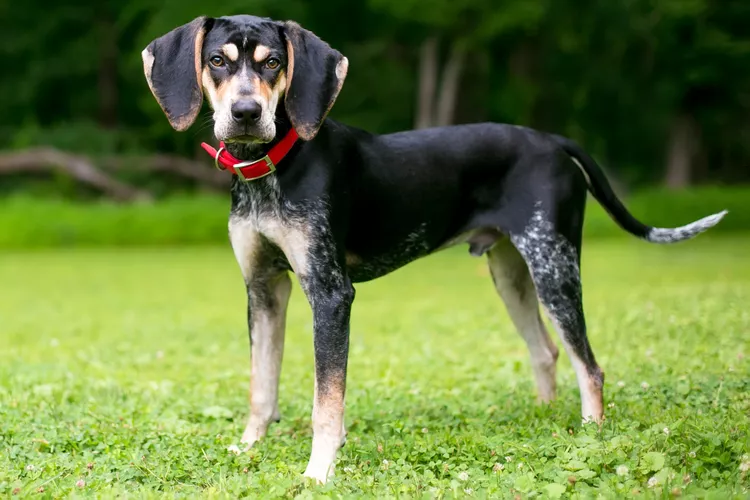
The bluetick coonhound is a medium-large hound dog breed native to the United States that sports a trademark ticked pattern on their short, smooth coat. These dogs generally have a friendly, sweet, and loyal disposition. They are used both for hunting and companionship. Above all, this breed belongs in an active home where there is plenty of access to explore the outdoors.
Here’s everything you need to know about this breed before bringing one home.
GROUP: Hound
HEIGHT: 21 to 25 inches (female), 22 to 27 inches (male)
WEIGHT: 45 to 65 pounds (female), 55 to 80 pounds (male)
COAT: Short, smooth
COAT COLOR: Blue ticked or blue ticked and tan, black spots
LIFE SPAN: 11 to 12 years
TEMPERAMENT: Sweet-tempered, active, affectionate
HYPOALLERGENIC: No
ORIGIN: United States
Bluetick coonhounds are large, muscular dogs, with females smaller than males. They tend to have a very affectionate temperament with their owners. They also can get along well with other dogs. But the high prey drive part of their personality might cause them to see other household pets as their quarry rather than a friend.
Also, bluetick coonhounds can be considered high-maintenance because they require a lot of attention. As high-energy dogs, they need lots of exercise every day. And they are known for being loud and vocal—referred to as “crooners,” they’ll bark, howl, bawl, and bay.
The bluetick coonhound may not be best for first-time dog owners, as they require proper training and plenty of physical activity that will allow them to release their energy in non-destructive ways.
Bluetick coonhounds were developed in the United States, and their bloodline dates back even prior to the founding of the country. They are said to descend from French hounds that were gifted to George Washington. The English foxhound, as well as some other hound breeds, are also thought to have played a role in the bluetick coonhound’s development.
The result was a big scent hound with good endurance and an excellent nose for the hunting trail. Frontiersmen used the breed for raccoon hunting, hence its name, as well as big-game hunting. The dogs work well in packs.
The breed has been recognized by other kennel clubs for decades, such as the United Kennel Club in 1946. But the American Kennel Club didn’t recognize it until 2009. Even so, it is a moderately popular dog breed throughout the U.S. and is even the mascot of the University of Tennessee.
Bluetick coonhounds require lots of activity, along with proper training and socialization, to be happy and healthy dogs. Their desire to follow a scent also must be managed. Luckily, their grooming needs are fairly easy and straightforward.
As hunting dogs, bluetick coonhounds are bred to have high energy and endurance. So adequate daily physical activity is a must to burn that energy. Aim to spend at least one to two hours per day on brisk walks, jogs, hikes, and play. You also can get your dog involved in dog sports, such as tracking and agility, to challenge them mentally and physically.
Because they are scent hounds, bluetick coonhounds will enjoy spending time in natural places, such as in the woods, where they can be active and use their nose to catch and track a variety of scents.
Always keep your dog on leash or in a secure fenced area when exercising. Once these dogs catch a scent, it’s extremely difficult to stop their desire to follow it, and they can quickly get far away. They also can be good escape artists, so it’s best to monitor them even if they’re in a fenced area.
The short, shiny coat of a bluetick coonhound has a moderate shedding rate. Routine basic grooming is typically all that’s necessary to keep your coonhound looking their best. Brush weekly to remove loose fur and distribute oils.
Plan on a bath roughly every month, depending on how dirty your dog has gotten. Likewise, check whether they need a nail trim monthly (active dogs often wear down their nails naturally and can go longer between trims).
Moreover, like all breeds with floppy ears, it’s important to keep your dog’s ears clean and dry. Check them at least weekly for any dirt, debris, redness, swelling, or other abnormalities.
These dogs respond to training fairly well, though they can have a stubborn side. Aim to start training when your dog is still a puppy. A large, strong, energetic adult coonhound with poor manners can be difficult to manage.
Always use positive training methods, and be consistent in your training cues. Enroll in an obedience class as soon as you’re able. Also, taking part in other dog activities, such as tracking, can help strengthen your bond with your dog.
Socialization is equally important to training. Ideally from a young age, expose your dog to different people, other dogs, and various locations to boost their comfort and confidence. Blueticks that don’t get enough attention might develop problematic behaviors, including excessively using their booming hound bay. They’re best for households where someone is home most of the day, and they will generally also enjoy the company of another dog.
Bluetick coonhounds are a healthy dog breed in general. But they are prone to some hereditary health conditions, including:
Always have fresh water accessible to your dog. And feed a quality, nutritionally balanced canine diet. Discuss the type of diet and quantity with your vet, as this can vary based on age, activity level, and other factors. Also, be mindful about feeding treats and other foods to prevent your dog from overeating. Maintaining your bluetick coonhound at a healthy weight is important, as obesity can increase the risk of other diseases, and excess weight could lead to joint problems.
Moreover, if your coonhound tends to eat quickly, this can trigger bloat. You might do better feeding smaller meals more frequently or using a food puzzle to slowly dispense the meal. Most owners feed two measured meals per day—that way, the dog won’t eat too much at one time.
If you’re looking for a breeder puppy, expect to pay around $1,000 on average, though this can vary widely depending on bloodline and other factors.
Check local animal shelters and breed-specific rescue groups for a bluetick coonhound in need of a home. For more information to connect you with a bluetick coonhound, check out:
The bluetick coonhound has a lot of attractive attributes, and can make the perfect loyal companion that you’re looking for. However, these active dogs need a lot of attention and plenty of exercise, and might not be the best choice for a home with other pets because of their strong prey drive.
Be sure to do adequate research before bringing home a bluetick coonhound. Speak to veterinarians, bluetick coonhound owners, reputable breeders, and hound rescue groups to learn more.
If you’re interested in similar breeds, check out:
There’s a whole world of potential dog breeds out there—with a little research, you can find the right one to bring home!
Bluetick coonhounds are typically very sweet and can be good for families with older children. However, their size combined with their high energy might be too exuberant for young children.
Bluetick coonhounds typically don’t display aggression with proper training and socialization. But they might view some small household pets, including cats, as prey.
Bluetick coonhounds generally aren’t well-suited to apartment living. They need ample space to move and play, and their loud voices might bother some neighbors.
Ear Mites in Puppies and Dogs
Ear mites can be a big discomfort for puppies and dogs. Learn about the causes, treatment, and prevention to keep mites away from your pets.
5 Common Foods In Your Pantry That Are Not Safe For Your Pets
One potato chip is not going to hurt your pet, but there are other foods that can. Learn which to avoid and some safe foods that can be used as treats.
Metronidazole for Dogs
Metronidazole is a medication that is frequently given to dogs for bacterial infections and protozoan infestations of the colon. Here's what to expect if your dog is on this antibiotic.
Pulled Muscles in Dogs
A pulled muscle is one of the most common injuries seen in dogs. What can you do if your dog pulls a muscle and how can you prevent it?
Giardia in Dogs
Giardia is a parasite that can affect dogs, humans, and other animals. Learn about Giardia in dogs, including causes, diagnosis, and treatment.
Can Cats Have Raw Eggs?
Eggs are known to be a protein-packed breakfast staple in American homes. Can your cat eat raw eggs? Here's your answer.
What to Know Before You Buy Food and Water Bowls For Your Cat
Get some important information you need to know before buying food and water bowls for your cat or kitten.
Can Cats Eat Salami?
The inspiration for a popular series of memes, the answer to "can cats have salami?" is yes--but only in small amounts.
What Fruits Can Cats Eat?
Can cats eat fruit? Learn which fruits are safe for cats and which should be avoided. Here's how to safely offer fruit to your cat as a treat.
Can Dogs Eat Raw Chicken Feet?
What are the potential health benefits of chicken feet for dogs? What are the risks?
What to Know About Byproducts in Cat Food
Byproducts in cat food are safe and can provide excellent nutrition.
Do Cats Cry When They Are Sad or in Pain?
Cats don't cry the way people do. Your cat can produce tears, but not ones of sadness. Explore the truth behind a cat's emotions and what those tears mean.
Cat Bunting Behavior: What Does It Mean?
Cats rub their heads against prominent objects to leave scent markings as a part of scent communication.
Why Do Cats Wag Their Tails?
Understanding cat tail language can reveal the many reasons cats wag their tails, and there are many.
Can Cats See in the Dark?
Cats can see well in the dark but, like humans, they don't have complete night vision. They can see better than humans in low-light situations.
Cat Humping: Why a Neutered Cat Still Mounts
Even if your male cat is neutered, he may continue to mount and hump cats or other objects because of health problems or behavioral issues.
Thai Ridgeback: Dog Breed Characteristics & Care
Learn all about the Thai Ridgeback, a rare breed from Thailand. Find out how to care for the loyal dog and where to buy or adopt one.
Doberman Pinscher (Dobie): Dog Breed Characteristics & Care
Doberman pinschers are intelligent, loyal, and athletic dogs. Find out more about them, including their history, fearless nature, care, and needs.
14 Pointer Dog Breeds
Pointers extend past the English or German shorthaired pointer. Learn more about the history and temperament of 14 popular pointing breeds.
Bernedoodle: Dog Breed Characteristics & Care
The Bernedoodle is a hybrid dog breed created by crossing Bernese mountain dogs with poodles. Learn about their fun-loving personality and common health issues.