At-Home Remedies for Red, Itchy Eyes in Dogs

32K
319
124
2025-11-10
At-Home Remedies for Red, Itchy Eyes in Dogs

Eye problems are often obvious to owners because dogs will rub at their eyes, rub their faces on the ground, wink, and even hold one or both eyes shut. Their eyes may also appear red, crusty, or teary.

Many owners don't know what they can safely do to help at home. Some products can cause serious, if not permanent, damage to an eye or interact with your dog's other medications so it is important to know how eye disease can be managed at home while you wait to see your veterinarian.

What Is 'Pink Eye' in Dogs?

Pink eye is the common name used in human medicine for conjunctivitis and can occur in dogs when the tissue that covers the surface of the eye, called the conjunctiva, becomes inflamed.

Red, itchy eyes can occur because of conjunctivitis and/or many other eye diseases. Conjunctivitis may be caused by an infection (viral, bacterial, or even parasitic), allergies, or foreign material irritating the surface of the eye. In all cases, a dog showing signs of an eye problem needs to be seen by a veterinarian because eyes are so delicate that even minor problems can snowball into serious problems quickly.

Depending on the diagnosis, your vet may treat the issue with antibiotics, steroids, anti-inflammatories, antihistamines, or many other medications. There are a few safe and effective measures you can take at home to keep your dog comfortable while you wait for your appointment.

  • 01 of 04

    Saline Eye Drops

    Saline eye drops can be used to safely flush any irritants out of a dog's eye. These drops won't hurt and may provide some temporary relief to your dog's inflamed eye.

    Saline eye drops can be purchased from a pharmacy, online, or from a pet store and should be gently squirted directly into your dog's eye. They are not the same as contact lens solutions. Contact lens solutions for humans have added ingredients and should never be used in a dog's eye as they can be harmful. Always be sure to keep the tip of the medication a small distance away from the surface of the eye to avoid scratches to the delicate eye tissues.

  • 02 of 04

    E-Collar

    While putting an e-collar on a dog with eye disease does not directly treat the problem, it does help to prevent any further damage to the eye. Dogs with itchy or painful eyes often rub the eye with a paw or on the ground and can scratch it or irritate it further. An e-collar will prevent this trauma while you wait for treatment.

    E-collars can be purchased from pet stores, online, or from your veterinarian and should be big enough so that your dog can't scratch its face or rub its eye on the floor or furniture. The basic rule of thumb is that an e-collar should reach 2 inches past the nose of your dog when put around its neck like a lampshade.

  • 03 of 04

    Cold Compress

    A cold compress can often provide relief from inflammation. For dogs with a red, itchy eye a cold, wet washcloth is usually the easiest and most comfortable way to apply a compress to the eye. Soft, cold compresses (not frozen, hard ice packs) can also be purchased online and from pharmacies.

    The compress can be applied to the closed eye for several minutes, several times a day to help decrease swelling and inflammation. A cold compress will not treat the underlying disease, but it will help your dog feel a little more comfortable.

  • 04 of 04

    Artificial Tears

    Different than simple saline eye drops, artificial tears have a lubricant in them that is safe for the eyes. If your dog's eyes are dry and irritated, artificial tears may help to provide additional moisture. These can be applied a few times a day; however, they do not contain medications to treat the underlying problem.

    Artificial tears come in either an eye drop or an ointment and are commonly used in dogs diagnosed with dry eye. Since they are not used to flush an eye but are instead designed to stay in the eye, only a small amount is needed so a small bottle or tube will go a long way.

When to See a Vet

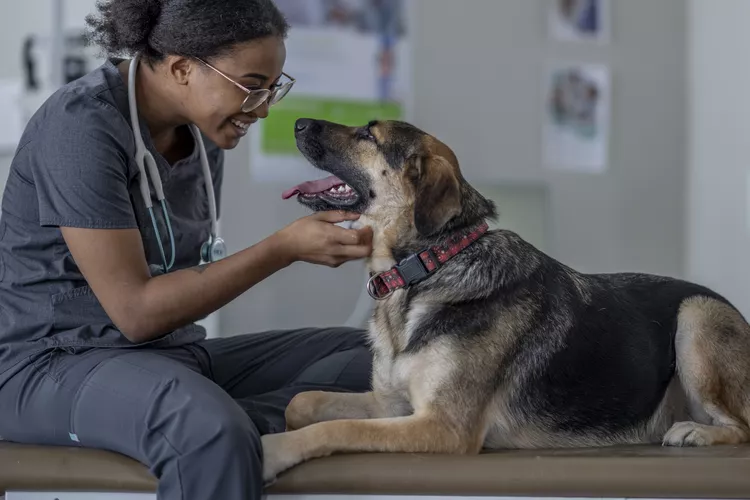
Home remedies can be a great adjunct therapy for your dog's eye problems, but eye disease requires medicated treatment and must be diagnosed and treated by a veterinarian.

You should contact your veterinarian as soon as you notice signs of an eye problem. This way, your dog can feel better as soon as possible and avoid worsening symptoms.

FAQ
  • What causes eye infections in dogs?

    A number of things can cause eye infections in dogs: allergens/irritants, bacteria, fungus, or foreign matter (like dust or hair).

  • How long does it take an eye infection to go away in dogs?

    Some infections, like conjunctivitis, take several weeks to clear up. Others can take days to weeks.

  • How serious is an eye infection in dogs?

    Very. Left untreated eye infections can cause your dog to lose vision, or worse, its eye.

  • When should I take my dog to the vet for an eye infection?

    If home remedies don't work quickly or if you see blood, pus, or anything that looks abnormal, please reach out to your vet for treatment.
Related Article

Ear Mites in Puppies and Dogs
46.4K
927
111

Ear Mites in Puppies and Dogs

Ear mites can be a big discomfort for puppies and dogs. Learn about the causes, treatment, and prevention to keep mites away from your pets.
5 Common Foods In Your Pantry That Are Not Safe For Your Pets
32.8K
327
117

5 Common Foods In Your Pantry That Are Not Safe For Your Pets

One potato chip is not going to hurt your pet, but there are other foods that can. Learn which to avoid and some safe foods that can be used as treats.
Metronidazole for Dogs
3.7K
331
62

Metronidazole for Dogs

Metronidazole is a medication that is frequently given to dogs for bacterial infections and protozoan infestations of the colon. Here's what to expect if your dog is on this antibiotic.
Pulled Muscles in Dogs
39.6K
2.4K
451

Pulled Muscles in Dogs

A pulled muscle is one of the most common injuries seen in dogs. What can you do if your dog pulls a muscle and how can you prevent it?
Giardia in Dogs
27.6K
1.7K
480

Giardia in Dogs

Giardia is a parasite that can affect dogs, humans, and other animals. Learn about Giardia in dogs, including causes, diagnosis, and treatment.
Can Cats Have Raw Eggs?
40K
4K
1.2K

Can Cats Have Raw Eggs?

Eggs are known to be a protein-packed breakfast staple in American homes. Can your cat eat raw eggs? Here's your answer.
What to Know Before You Buy Food and Water Bowls For Your Cat
7.7K
695
104

What to Know Before You Buy Food and Water Bowls For Your Cat

Get some important information you need to know before buying food and water bowls for your cat or kitten.
Can Cats Eat Salami?
42.1K
841
201

Can Cats Eat Salami?

The inspiration for a popular series of memes, the answer to "can cats have salami?" is yes--but only in small amounts.
What Fruits Can Cats Eat?
27.1K
813
211

What Fruits Can Cats Eat?

Can cats eat fruit? Learn which fruits are safe for cats and which should be avoided. Here's how to safely offer fruit to your cat as a treat.
Can Dogs Eat Raw Chicken Feet?
16.9K
505
237

Can Dogs Eat Raw Chicken Feet?

What are the potential health benefits of chicken feet for dogs? What are the risks?
What to Know About Byproducts in Cat Food
47.5K
1.4K
156

What to Know About Byproducts in Cat Food

Byproducts in cat food are safe and can provide excellent nutrition.
Do Cats Cry When They Are Sad or in Pain?
8.4K
421
88

Do Cats Cry When They Are Sad or in Pain?

Cats don't cry the way people do. Your cat can produce tears, but not ones of sadness. Explore the truth behind a cat's emotions and what those tears mean.
Cat Bunting Behavior: What Does It Mean?
48.7K
974
418

Cat Bunting Behavior: What Does It Mean?

Cats rub their heads against prominent objects to leave scent markings as a part of scent communication.
Why Do Cats Wag Their Tails?
11.5K
229
41

Why Do Cats Wag Their Tails?

Understanding cat tail language can reveal the many reasons cats wag their tails, and there are many.
Can Cats See in the Dark?
18.4K
1.8K
902

Can Cats See in the Dark?

Cats can see well in the dark but, like humans, they don't have complete night vision. They can see better than humans in low-light situations.
Cat Humping: Why a Neutered Cat Still Mounts
44.2K
2.2K
640

Cat Humping: Why a Neutered Cat Still Mounts

Even if your male cat is neutered, he may continue to mount and hump cats or other objects because of health problems or behavioral issues.
Thai Ridgeback: Dog Breed Characteristics & Care
13.3K
133
38

Thai Ridgeback: Dog Breed Characteristics & Care

Learn all about the Thai Ridgeback, a rare breed from Thailand. Find out how to care for the loyal dog and where to buy or adopt one.
Doberman Pinscher (Dobie): Dog Breed Characteristics & Care
25.4K
1.3K
228

Doberman Pinscher (Dobie): Dog Breed Characteristics & Care

Doberman pinschers are intelligent, loyal, and athletic dogs. Find out more about them, including their history, fearless nature, care, and needs.
14 Pointer Dog Breeds
22K
2K
355

14 Pointer Dog Breeds

Pointers extend past the English or German shorthaired pointer. Learn more about the history and temperament of 14 popular pointing breeds.
Bernedoodle: Dog Breed Characteristics & Care
47.4K
4.7K
1.9K

Bernedoodle: Dog Breed Characteristics & Care

The Bernedoodle is a hybrid dog breed created by crossing Bernese mountain dogs with poodles. Learn about their fun-loving personality and common health issues.