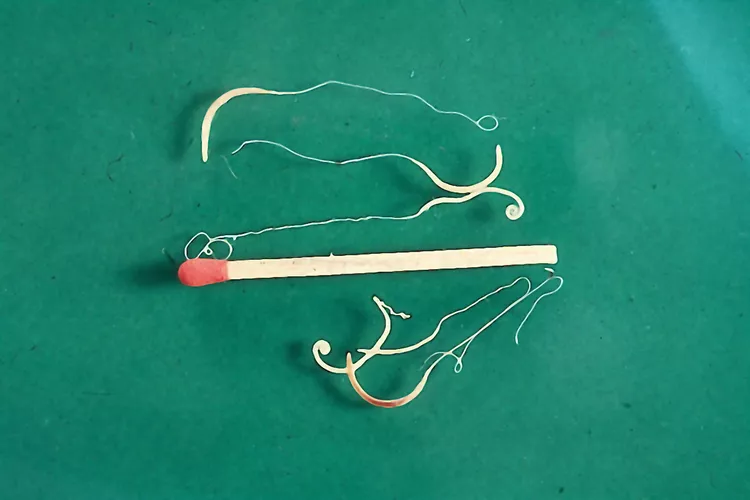
Whipworms are intestinal parasites that are relatively common in dogs. The medical term for a whipworm infestation is "trichuriasis." There are a variety of Trichuris species that affect different host species. The Trichuris vulpis parasite is often transmitted to dogs after they ingest soil contaminated with feces from infected dogs.
Whipworms are small worms, reaching a maximum size of 2 to 3 inches. They have a thin, whip-like front end and a thicker back end. The whipworms attach themselves to the walls of the large intestine, feeding on blood.
If your dog only has a small infestation of whipworms, it may not have any symptoms. Heavy infestations, however, usually cause diarrhea, weight loss, and sometimes anemia. While whipworms can infect any dog, they can potentially be more serious in young dogs, senior dogs, or dogs with weakened immune systems.
Whipworms are one of the four common intestinal worms that infect dogs. The other three are tapeworms, roundworms, and hookworms.
Whipworms have a simple life cycle; their eggs are passed in the dog's feces, and under ideal conditions, whipworm eggs can mature and become capable of causing infection after about two to four weeks in the environment. They are quite resistant to heat and dry conditions and can remain viable outside a host for as long as five years.
Once the eggs are ingested by a dog (for example, when a dog is grooming itself or eating things off the ground), they hatch in the dog's small intestine.
Eventually, the larvae move to the large intestine, taking about 11 weeks to become mature adults. They are then capable of producing more eggs, which then pass to the environment through the dog's stool, thus starting the cycle all over again.
In dogs with light infections, there are usually no symptoms. As an infection intensifies, inflammation of the large intestine can result, and any of the following symptoms may appear.
Dogs with heavy loads of whipworms usually develop diarrhea, which can become chronic, leading to weight loss and dehydration. Often, the diarrhea is bloody or gooey. The intestinal inflammation can make it painful for the dog to pass feces, and you might notice your dog straining or crying while having a bowel movement.
Very heavy infestations can cause the dog to become anemic, meaning the dog has too few red blood cells. This can cause the dog to be fatigued or weak, and you might notice your dog's gums are paler than normal.
Rarely, whipworm infections cause a syndrome similar to Addison's disease, with periodic episodes of weakness and electrolyte imbalance, along with the typical symptoms of diarrhea. The mechanism of this effect is not understood, however.
The cause of a whipworm infection is the dog ingesting viable whipworm eggs from the soil. This can happen when a dog eats something off the ground, or if a dog gets whipworm eggs on its fur and then grooms itself. Once the dog has ingested the eggs, they mature within the dog's intestinal system.
The eggs of whipworms are too small to be seen with the naked eye, but they can be detected in a stool sample under the microscope. The test process is called fecal flotation. Unlike roundworms and hookworms, however, female whipworms only produce eggs intermittently, so the eggs can be difficult to catch on fecal tests. Repeated tests may be necessary, and if a whipworm infection is suspected, it is common to treat for whipworms even if eggs are not found.
Many medications can be used to treat whipworms, and your vet can help you pick the right one. Whipworms are often resistant to some common dewormers, so the treatment may be a prescription that is new to you. Multiple treatments are usually recommended for best results, usually spaced four weeks apart for at least 3 months. Most dogs fully recover from a whipworm infection with treatment.
Since the eggs survive for a long time, the potential for reinfection from eggs that are left in the intestinal tract is significant. Your vet may recommend that you give your dog a parasite preventative every few months. Often, a heartworm preventative that also prevents whipworms is prescribed.
While it might take multiple treatments to completely eradicate whipworms, your dog should recover entirely once the worms are gone.
If your dog has been diagnosed with whipworms, take care to clean any surfaces that may be infested. It is important to promptly remove pet waste, which could contain eggs. If your dog frequently defecates in a certain area in your yard, it may be beneficial to replace any gravel, wood chips, or other material in the area that is hard to clean.
While it can be difficult to entirely prevent your dog from eating things off the ground, do your best to keep your dog away from areas where you know it is likely to graze. Brush and bathe your dog regularly to help remove eggs from its fur.
In areas where whipworms are common, your veterinarian might recommend that you keep your dog on a regular schedule of heartworm preventative that is also effective against whipworms to reduce the risk of reinfection.
The canine whipworm, Trichuris vulpis, very rarely infects humans, although it can infect other dogs in your home. There are also species of whipworms that mostly infect cats. However, animal whipworms are not considered a significant human health risk. There is a species of whipworm, Trichuris trichuria, that does infect humans, though.

Ear Mites in Puppies and Dogs
Ear mites can be a big discomfort for puppies and dogs. Learn about the causes, treatment, and prevention to keep mites away from your pets.
5 Common Foods In Your Pantry That Are Not Safe For Your Pets
One potato chip is not going to hurt your pet, but there are other foods that can. Learn which to avoid and some safe foods that can be used as treats.
Metronidazole for Dogs
Metronidazole is a medication that is frequently given to dogs for bacterial infections and protozoan infestations of the colon. Here's what to expect if your dog is on this antibiotic.
Pulled Muscles in Dogs
A pulled muscle is one of the most common injuries seen in dogs. What can you do if your dog pulls a muscle and how can you prevent it?
Giardia in Dogs
Giardia is a parasite that can affect dogs, humans, and other animals. Learn about Giardia in dogs, including causes, diagnosis, and treatment.
Can Cats Have Raw Eggs?
Eggs are known to be a protein-packed breakfast staple in American homes. Can your cat eat raw eggs? Here's your answer.
What to Know Before You Buy Food and Water Bowls For Your Cat
Get some important information you need to know before buying food and water bowls for your cat or kitten.
Can Cats Eat Salami?
The inspiration for a popular series of memes, the answer to "can cats have salami?" is yes--but only in small amounts.
What Fruits Can Cats Eat?
Can cats eat fruit? Learn which fruits are safe for cats and which should be avoided. Here's how to safely offer fruit to your cat as a treat.
Can Dogs Eat Raw Chicken Feet?
What are the potential health benefits of chicken feet for dogs? What are the risks?
What to Know About Byproducts in Cat Food
Byproducts in cat food are safe and can provide excellent nutrition.
Do Cats Cry When They Are Sad or in Pain?
Cats don't cry the way people do. Your cat can produce tears, but not ones of sadness. Explore the truth behind a cat's emotions and what those tears mean.
Cat Bunting Behavior: What Does It Mean?
Cats rub their heads against prominent objects to leave scent markings as a part of scent communication.
Why Do Cats Wag Their Tails?
Understanding cat tail language can reveal the many reasons cats wag their tails, and there are many.
Can Cats See in the Dark?
Cats can see well in the dark but, like humans, they don't have complete night vision. They can see better than humans in low-light situations.
Cat Humping: Why a Neutered Cat Still Mounts
Even if your male cat is neutered, he may continue to mount and hump cats or other objects because of health problems or behavioral issues.
Thai Ridgeback: Dog Breed Characteristics & Care
Learn all about the Thai Ridgeback, a rare breed from Thailand. Find out how to care for the loyal dog and where to buy or adopt one.
Doberman Pinscher (Dobie): Dog Breed Characteristics & Care
Doberman pinschers are intelligent, loyal, and athletic dogs. Find out more about them, including their history, fearless nature, care, and needs.
14 Pointer Dog Breeds
Pointers extend past the English or German shorthaired pointer. Learn more about the history and temperament of 14 popular pointing breeds.
Bernedoodle: Dog Breed Characteristics & Care
The Bernedoodle is a hybrid dog breed created by crossing Bernese mountain dogs with poodles. Learn about their fun-loving personality and common health issues.